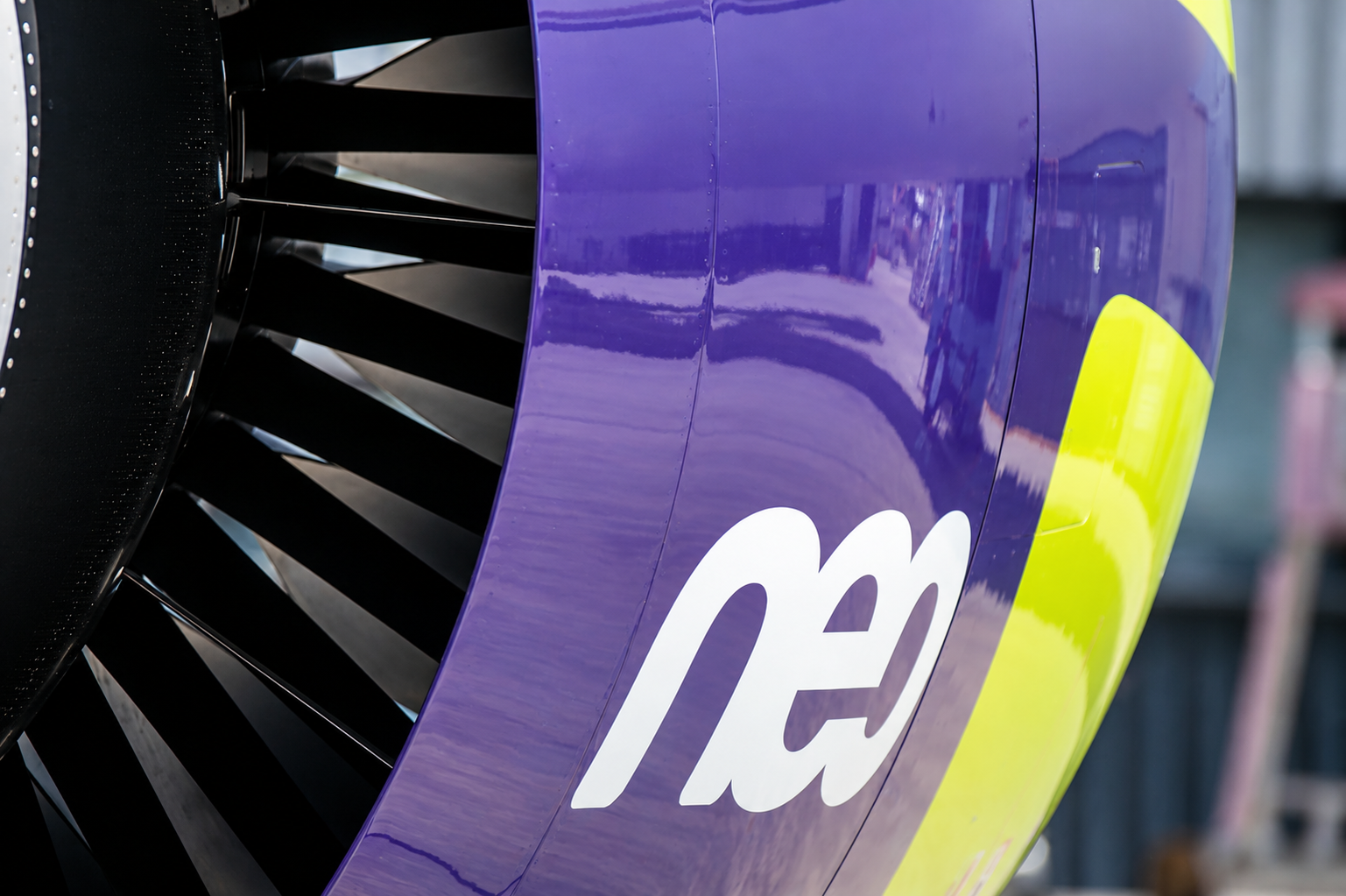
A320neo vs A320ceo: the Regulatory Answer First
Airbus uses ceo for current engine option and neo for new engine option. A320ceo aircraft use the earlier engine options, principally CFM56 and IAE V2500, while A320neo aircraft use CFM LEAP-1A or Pratt & Whitney PW1100G-JM engines. The terms describe the engine-option generations; ceo does not mean classic engine option.
The A320ceo and A320neo share the same basic Airbus A320 Family platform, but maintenance qualification is determined by the applicable aircraft type rating, not by visual similarity or the common A320 name. Under EASA Part-66, the aircraft-and-engine combination matters.
For a Part-66 licence holder, an existing A320ceo rating does not automatically give privileges on an A320neo configuration that is listed as a different rating. The applicant must complete either the applicable full type training or an approved theoretical and practical differences training course before applying for the additional rating, subject to the relevant prerequisites.
For CAMO, planning, quality, technical services and other non-certifying roles, the objective is different. These personnel normally need role-appropriate knowledge and competence rather than a Part-66 endorsement. General Familiarization training may therefore be the right solution, provided its syllabus covers the aircraft and engine configuration they support.
Three Training Routes that Must not be Confused
| Training route | Purpose | Typical Audience | Licence Endorsement |
|---|---|---|---|
| General Familiarization | Awareness-level understanding of aircraft systems, operation and configuration | CAMO, planners, quality, technical services, management and other non-certifying roles | No |
| General Familiarization differences | Awareness of changes between defined source and destination configurations | Personnel already familiar with the source configuration who do not need licensing credit | No |
| Approved type or differences training | Theoretical and practical training supporting a Part-66 type-rating pathway | Part-66 licence holders seeking the relevant aircraft type rating | May support endorsement, subject to all applicable requirements |
The word differences can describe two very different products. A short General Familiarization differences course is an awareness course. EASA Part-66 Appendix III differences training is an approved theoretical and practical route between defined type ratings. A certificate from the first cannot be used as evidence of completing the second.
Why the Engine Changes the Maintenance Training Scope
The largest A320neo maintenance-training change is the engine. A320ceo aircraft commonly use CFM56 or IAE V2500 engines, while A320neo aircraft use CFM LEAP-1A or Pratt & Whitney PW1100G-JM engines. The airframe retains substantial commonality, but the engine architecture, maintenance data, tooling, inspections, troubleshooting and configuration control are not interchangeable.
For training and competence planning, each engine should be treated as its own ATA 70-80 scope:
1. CFM56
2. IAE V2500
3. CFM LEAP-1A
4. Pratt & Whitney PW1100G-JM
The practical lesson is simple: organisations should select training by aircraft-and-engine configuration, not by the A320 family name alone.
CFM LEAP-1A: Key Maintenance-Training Differences
The LEAP-1A introduces materials, inspection methods and configuration-control considerations that cannot be carried over directly from CFM56 experience. Its fan uses 3-D woven carbon-fibre composite blades. Damage classification, inspection methods, allowable limits and repair disposition must therefore come from the current LEAP-1A approved maintenance data, not from metallic CFM56 fan-blade criteria.
Relevant training and task preparation commonly include:
1. ATA 72 fan-blade inspection methods and damage limits;
2. effectivity-controlled borescope access and inspection-zone planning for compressor, combustor, HPT and LPT modules;
3. special tooling, adapters, turning equipment and recording requirements;
4. serialised component and engine build-standard control;
5. links between ATA 73/77 control data and ATA 72 mechanical inspection; and
6. use of current AMM, ESM, service bulletin and airworthiness directive data for task planning and finding disposition.
Configuration status is especially important. FAA and EASA certified the LEAP-1A HPT durability kit in December 2024. The kit includes the HPT stage 1 blade, HPT stage 1 nozzle and forward inner nozzle support. CFM later reported that more than 1,200 kits had been produced and shipped by November 2025. A maintenance organisation should therefore verify the actual installed standard by engine serial number and records rather than infer it from aircraft age or visit date.
Current airworthiness actions remain separate from training material. EASA AD 2025-0171R2 addresses HPT rotor stage 1 blade inspection for affected LEAP-1A/-1C engines. Courseware can explain the technical context, but it never replaces the AD, referenced CFM service bulletins, their effectivity or compliance instructions.
PW1100G-JM: Geared Turbofan Knowledge
The PW1100G-JM introduced a geared turbofan architecture to the A320 Family. Its fan drive gear system allows the fan to rotate at a different speed from the low-pressure compressor and turbine. This creates maintenance and troubleshooting concepts that do not exist in the same form on traditional direct-drive CFM56 engines.
A suitable course should address the engine as a complete configuration, including:
1. fan drive gear architecture and operating principles;
2. oil-system monitoring and servicing considerations;
3. chip detection and debris-monitoring practices;
4. engine health monitoring and fault-isolation logic;
5. engine-specific inspection, maintenance and troubleshooting procedures; and
6. effectivity, modification and technical-record control.
For technicians coming from CFM56 or V2500 fleets, these are not merely a few revised procedures. They require dedicated engine-specific knowledge supported by the current approved maintenance data.
What the Approved A320 Family Differences Analysis Identifies
The FL Technics A318/A319/A320/A321 aircraft type analysis compares neo, ceo/enhanced and ceo/classic configurations across the A320 Family. Its central conclusion is that the installed engine drives the largest training gap: the complete ATA 70-80 engine scope is different for CFM56, IAE V2500, CFM LEAP-1A and PW1100G configurations.
The same analysis identifies a smaller set of airframe and aircraft-system differences. The simplified summary below is suitable for course-selection discussions; it does not reproduce the full approved analysis or replace aircraft effectivity data.
| ATA | System or Area | Approved-Analysis Finding | Training Relevance |
|---|---|---|---|
| 23-12 | Multiple VHF Data Radio (MVDR) | Identified for the transition from ceo to neo. | Cover the installed communication and data-radio architecture. |
| 28 | Fuel system and fuel recirculation cooling | Model and engine-configuration differences include fuel-system operation and ATA 28-16 fuel recirculation cooling. | Use the applicable aircraft and engine configuration, not a generic A320 fuel-system assumption. |
| 30 / 36 | Engine intake anti-ice, engine bleed and leak detection | The analysis lists these topics against each installed engine configuration. | Teach the interfaces and procedures applicable to the installed powerplant. |
| 34 | BUSS, ROP and T/TISS | Back Up Speed Scale, Runway Overrun Protection and T/TISS are identified for ceo-to-neo coverage; some ceo/enhanced installations are optional. | Confirm option status and aircraft effectivity before assigning the syllabus. |
| 35-10 | Crew oxygen system | Configuration differences are identified between A320 Family standards. | Cover the system standard actually installed on the aircraft. |
| 46-26 | FOMAX | Flight Operations Maintenance Exchanger is identified as an optional ceo-to-neo difference. | Include only where installed and relevant to the role. |
| 49 / 52 / 57 | APU, Airbus Cabin Flex and wingtip configuration | The analysis identifies APU population differences, ACF for ceo-to-neo coverage and sharklets on later-manufactured aircraft. | Check model, modification status and installed configuration. |
| 70-80 | Powerplant | The complete engine section is different for each CFM56, V2500, LEAP-1A and PW1100G configuration. | Treat each engine as a separate training scope; do not reduce the change to a short list of engine deltas. |
The approved analysis also records model-to-model and reverse-direction differences, including items relevant only when moving from neo back to earlier ceo/classic standards. Those items should not automatically be presented as neo additions. For any actual training programme, the source rating, destination rating, model, option status and modification standard must be defined first.
Because the approved analysis is a baseline document, the applicable AMM, configuration records, current approved syllabus and Training Needs Analysis remain controlling for aircraft effectivity and task-level competence.
Who Needs General Familiarization Training?
General Familiarization is appropriate when personnel need to understand the aircraft but do not need a Part-66 licence endorsement from the course. Typical users include:
1. maintenance planners and production support personnel;
2. CAMO and airworthiness review support teams;
3. technical services, reliability and engineering support personnel;
4. quality, compliance and training personnel;
5. material, logistics and supply-chain specialists;
6. management and newly hired technical personnel.
The organisation should still connect the course to a role-specific competence process. A General Familiarization certificate records completed training; it does not itself prove practical competence, issue an authorisation or grant certification privileges.
General Familiarization is not Category C Training
General Familiarization, ATA Specification 104 Level 1 terminology and EASA Part-66 Category C are often discussed together, but they are not interchangeable. General Familiarization is an awareness-level training activity. Category C is a Part-66 licence category with its own licensing, experience, training and authorisation framework.
Some General Familiarization and Category C type-training syllabi may use similar Level 1 learning objectives and cover many of the same systems. Similar content does not make the courses legally equivalent. The approved course purpose, syllabus, assessment and certification route remain decisive.
When Full Type Training or Approved Differences Training is Required
Personnel seeking Part-66 privileges must work from the exact rating already held and the rating to be added. Appendix III permits differences training between two aircraft type ratings of the same manufacturer when the course is defined case by case and covers the required theoretical and practical differences.
The applicant must already hold the source rating or have completed the applicable source type-training requirements. The competent authority remains responsible for the licence endorsement. After endorsement, the Part-145 organisation separately assesses competence and issues any certifying staff authorisation in accordance with its procedures.
Accordingly, the complete pathway may include:
1. Approved training. Full type training or an approved theoretical and practical differences course for the relevant destination rating.
2. Part-66 endorsement. Application to the competent authority with the required evidence.
3. Organisational competence assessment. Assessment against the tasks, environment and procedures of the employing organisation.
4. Part-145 authorisation. Formal authorisation defining the privileges the organisation grants to the individual.
How to Select the Right A320 Course
1. Identify the exact configuration. Confirm A320ceo or A320neo and the installed engine: CFM56, V2500, LEAP-1A or PW1100G-JM.
2. Define the objective. Is the requirement awareness, role competence, licence endorsement or company authorisation?
3. Check the person’s starting point. Review existing Part-66 ratings, previous training, experience, role and destination privileges.
4. Match the regulatory route. Use General Familiarization for awareness; General Familiarization differences for awareness of changes; and approved full type or Appendix III differences training for a type-rating pathway.
5. Confirm the syllabus and evidence. Check engine coverage, theoretical and practical elements, assessments, certificate wording and whether the course sits within the provider’s approved scope.
A320 General Familiarization Course Options
The following self-paced, pre-recorded online FL Technics Training courses provide awareness-level knowledge. They are not approved Part-66 aircraft type training and do not support a type-rating endorsement or certification privileges.
| Course | Engine | Duration | Recommended for |
|---|---|---|---|
| A320 Family General Familiarization | CFM56, V2500, PW1100G-JM and LEAP-1A | 22 h 30 min | Personnel supporting the complete A320 Family and all engine options |
| A320ceo and A320neo LEAP-1A General Familiarization | CFM56 and LEAP-1A | 19 h 04 min | Personnel supporting CFM56-powered ceo and LEAP-1A-powered neo fleets |
| A320neo General Familiarization Differences from A320ceo - Both Engines | PW1100G-JM and LEAP-1A | 2 h 37 min | Personnel already familiar with A320ceo who need awareness of both neo engine options |
| A320neo LEAP-1A General Familiarization Differences from A320ceo | LEAP-1A | 1 h 43 min | Personnel already familiar with A320ceo who support LEAP-1A aircraft |
| A320neo PW1100G-JM General Familiarization Differences from A320ceo | PW1100G-JM | 1 h 10 min | Personnel already familiar with A320ceo who support PW1100G-JM aircraft |
Choose your Airbus A320 General Familiarization course on the right →
or
Click here to explore our full selection of A320 GenFam courses.
Practical Examples
-
1.
Example 1: maintenance planner
A planner supporting a LEAP-1A-powered A320neo fleet needs enough configuration knowledge to understand maintenance requirements, work packages and technical documentation. If no licensing objective exists, an A320neo General Familiarization course covering LEAP-1A may be appropriate, followed by company-specific procedures and competence assessment. -
2.
Example 2: B1.1 engineer moving from A320ceo to A320neo
A B1.1 engineer holds the relevant A320ceo rating and will certify maintenance on an A320neo configuration listed as a different rating. A short online familiarization course is not sufficient for licence purposes. The engineer needs the applicable approved full type training or approved theoretical and practical differences training, licence endorsement and subsequent Part-145 competence assessment and authorisation. -
3.
Example 3: quality auditor covering mixed A320 fleets
A quality auditor does not require certification privileges from the course but needs to understand the maintenance risks created by multiple engine configurations. A General Familiarization package covering the relevant ceo and neo engines may provide the necessary technical context, provided it is supplemented by the organisation’s procedures and audit competence requirements.
Conclusion
The correct A320 training decision begins with four facts: the aircraft configuration, installed engine, learner’s existing qualification and intended privilege. The approved A320 Family analysis confirms substantial airframe commonality, but also identifies defined system differences and a completely different ATA 70-80 scope for each engine configuration.
Use General Familiarization for awareness, General Familiarization differences for awareness of defined changes, and approved full type or Appendix III differences training when the objective is a Part-66 type-rating endorsement. Then complete the organisation’s competence assessment and authorisation process for the actual role and tasks.
Need Help Choosing the right A320 Course?
Provide the aircraft model, installed engine, learner’s role, existing licence ratings and intended training objective. FL Technics Training can then identify whether the documented need is best met by General Familiarization, General Familiarization differences or an approved EASA Part-66 aircraft type-training pathway.
Authoritative References
1. FL Technics Airbus A318/A319/A320/A321 Aircraft Type Analysis, Issue 1, issued 22 November 2021
2. EASA Easy Access Rules for Continuing Airworthiness - Part-66 Appendix III
3. EASA Part-66 FAQ: adding a similar aircraft rating
4. EASA AD 2025-0171R2: LEAP-1A/-1C HPT rotor stage 1 blade inspection
5. CFM: FAA and EASA certify more durable LEAP HPT hardware